RESUMEN RÁPIDO
Comparativa arquitectónica entre adoquines de travertino natural y baldosas de porcelánico de 20 mm: temperatura bajo el sol, resistencia antideslizante y bordes de piscina.
[ES] In high-end residential landscape design, resort terraces, and swimming pool decks, the debate between natural travertine pavers and 20mm outdoor porcelain tiles is one of the most frequent specification decisions facing architects and developers. While porcelain manufacturers market uniform aesthetics and zero water absorption, natural Turkish travertine delivers fundamental thermodynamic and tactile advantages that engineered ceramics cannot replicate.
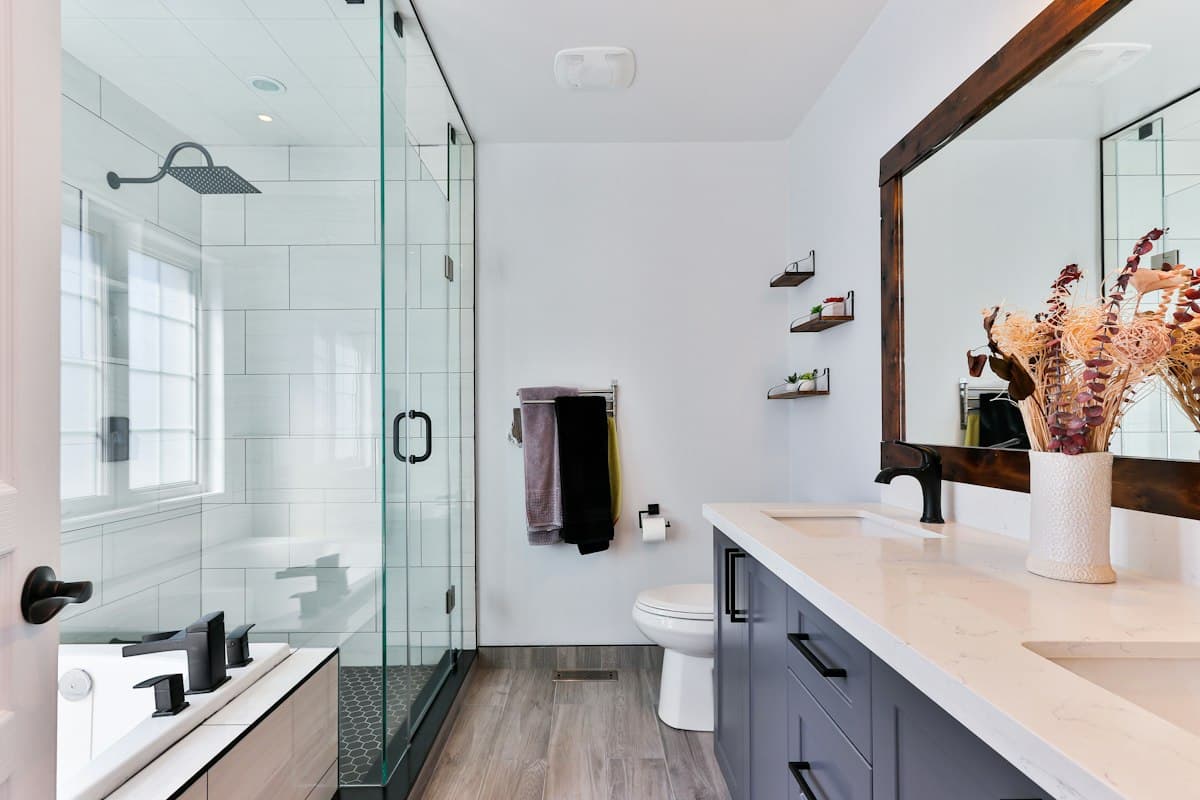
When specifying materials for barefoot luxury environments subjected to intense solar radiation and continuous splash zones, four critical performance factors dictate long-term project success: surface thermal absorption, wet slip safety, on-site edge fabrication, and structural aging.
1. Thermodynamic Behavior: Barefoot Solar Comfort
The most decisive functional differentiator between travertine and porcelain outdoors is thermal conductivity and heat retention:
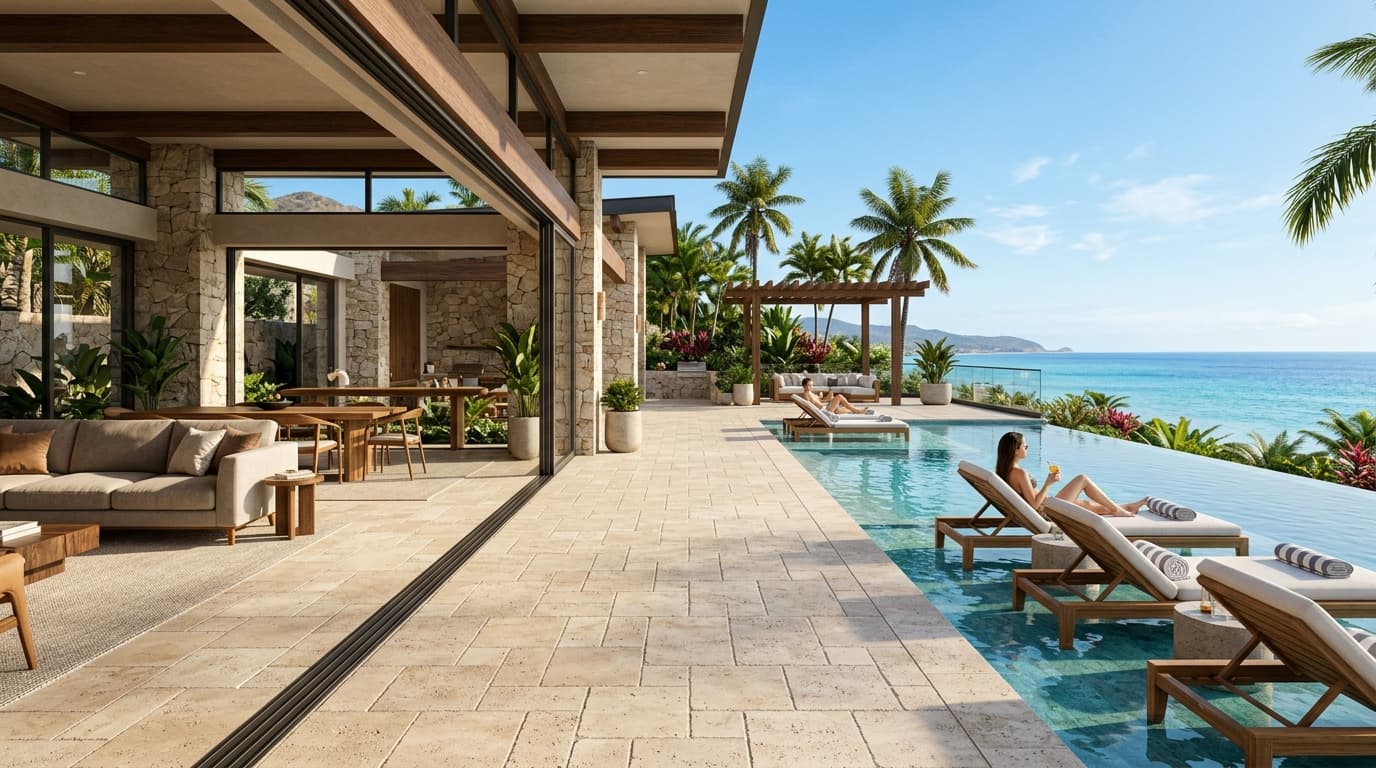
- Natural Travertine Cellular Structure: Travertine is formed through rapid geothermal precipitation of calcium carbonate, resulting in microscopic voids and air vacuoles. These cellular pockets break thermal bridging, allowing the stone to dissipate solar heat rapidly. Even in 40°C (104°F) Mediterranean or Gulf summer weather, light ivory and silver travertine remain comfortable for barefoot walking.
- Vitrified Porcelain Heat Trapping: 20mm outdoor porcelain is an ultra-dense, non-porous sintered clay matrix. Under direct sunlight, dense ceramic bodies absorb and retain extreme surface temperatures—often reaching 55°C to 65°C (130°F+), making barefoot transit around pool perimeters hazardous for hotel guests and private homeowners.
| Performance Attribute | Natural Turkish Travertine (3.0 cm) | Outdoor Porcelain Paver (2.0 cm) |
|---|---|---|
| Barefoot Surface Temperature | Stays significantly cooler under intense UV exposure | Becomes hot to touch in high solar environments |
| Wet Slip Resistance Profile | Natural micro-texture & open voids provide organic R11 grip | Relies on synthetic surface glaze or stamped micro-relief |
| Pool Coping Fabrication | Seamlessly cut, bullnosed, and edge-profiled on-site | Requires specialized diamond milling; exposed ceramic core |
| Aging & Patina | Matures organically; scratches blend into natural grain | Surface chips expose underlying contrasting ceramic biscuit |
| Installation Sub-Base | Direct sand/gravel dry-lay, mortar bed, or pedestal systems | Pedestal systems or rigid adhesive on concrete slab |
2. Wet Slip Resistance: Natural Porosity vs. Ceramic Glazes
Swimming pool surrounds, outdoor showers, and open courtyards require certified slip resistance when wet:
Travertine pavers with an unfilled, tumbled, or brushed finish naturally achieve an R11 slip rating. The presence of natural geological cavities provides microscopic suction cups beneath feet, displacing water film and preventing hydroplaning without abrasive additives.
Conversely, outdoor porcelain relies on synthetic embossed textured glazes. While achieving high initial friction, fine textured ceramic surfaces can trap sunscreen oils, algae, and grime in pool water splash zones, requiring chemical degreasers to maintain safety.
Explore our architectural Light Travertine and Silver Travertine selections.
3. On-Site Fabrication and Pool Coping Integration
Custom pool geometry, steps, curved edges, and drainage channels expose porcelain's greatest limitation: edge detailing.
- Monolithic Travertine Workability: Travertine is a solid, homogeneous natural stone throughout its 30mm or 50mm thickness. Stone masons can effortlessly shape drop-down apron faces, carve full bullnoses, chamfer 45-degree miters, and core-drill plumbing penetrations directly on-site using standard diamond tools. The exposed cut face reveals the exact same authentic veining as the top surface.
- Porcelain Edge Limitations: Porcelain tiles have a decorative printed surface layer over a monochrome ceramic body. Mitering thin porcelain edges around pool coping creates fragile knife edges vulnerable to chipping. Factory-milled copings require long lead times and offer zero tolerance for on-site pool basin irregularities.
4. Sub-Base Flexibility and Ground Movement
Outdoor paving must withstand freeze-thaw cycles and ground settling:
- Sand-Set Travertine Flexibility: 30mm travertine pavers are commonly dry-laid over a compacted crushed aggregate and bedding sand layer. This semi-flexible system naturally absorbs minor ground settling without cracking and allows individual pavers to be lifted for utility maintenance.
- Rigid Porcelain Base Demands: 20mm porcelain pavers installed on sand beds are prone to corner shifting and lippage due to their lighter mass per piece. Full mortar bed installation on concrete slabs is often mandated, significantly increasing foundation civil costs.
For container load weights, slab capacities, and ocean freight logistics, use our B2B Container Calculator or request architectural samples through our procurement desk.
Especifique y Obtenga Directamente de Canteras Turcas
Burdur Marble exporta losas calibradas y baldosas biseladas con estándares certificados TS EN y logística de contenedores FOB desde Turquía.
Travertino Turco vs. Travertino Italiano