SUMMARY
The definitive technical guide for architects and lighting designers on backlighting natural onyx slabs — Kelvin temperatures, diffuser distance, heat dissipation, and structural backing.
Backlit natural onyx represents the pinnacle of luxury architectural surfaces. When illuminated from behind, the dense crystalline matrix of calcium carbonate transforms into a glowing, three-dimensional canvas of organic mineral art. However, executing a flawless backlit onyx installation requires strict architectural and lighting engineering protocols to prevent hot-spots, uneven illumination, and thermal stress.
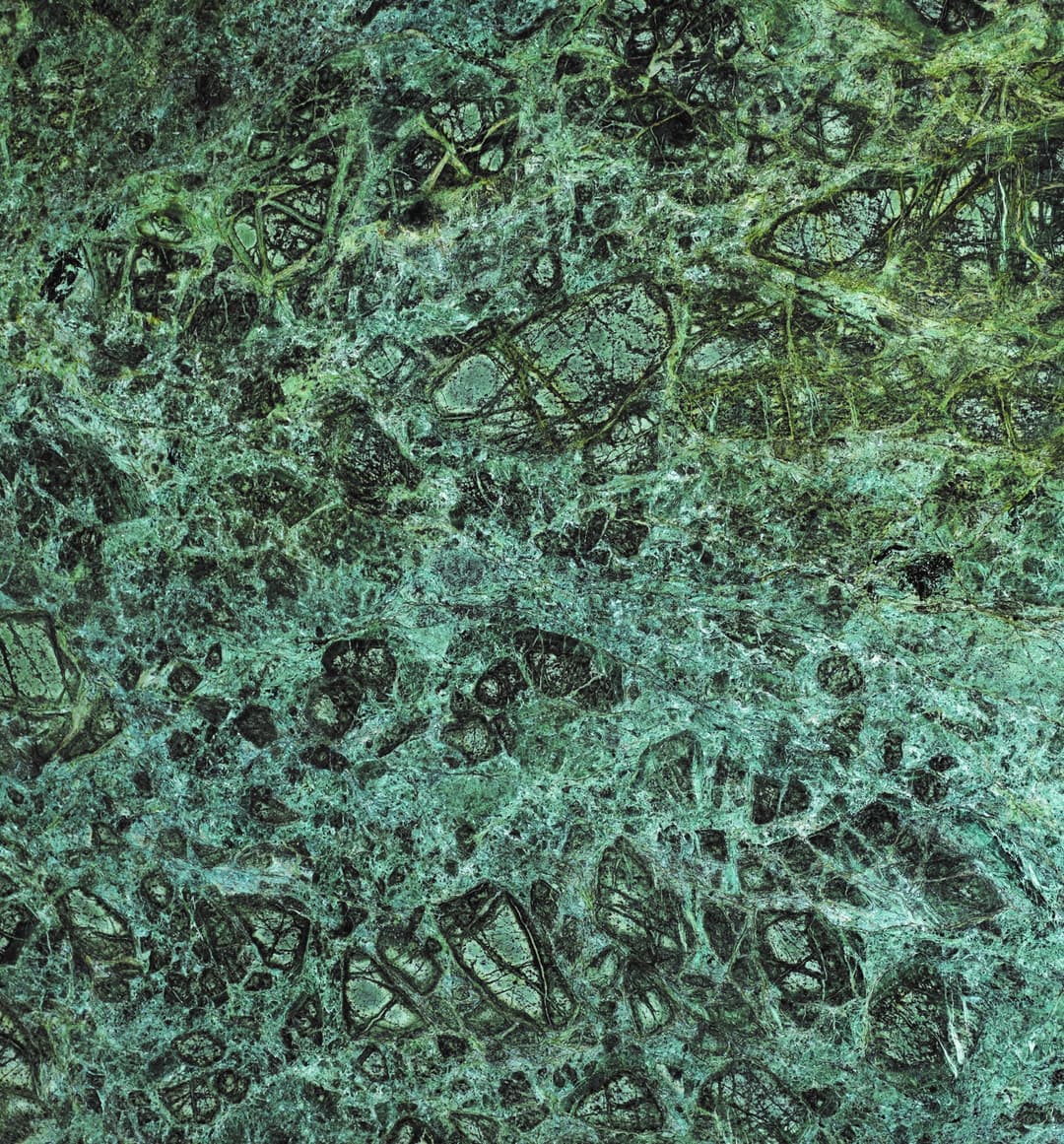
Explore our premium Amber Onyx, Green Onyx, and Rainbow Onyx collections for backlit architectural projects.
1. The Physics of Onyx Translucency
Unlike opaque marbles or granites, natural onyx is a cryptocrystalline form of calcite or aragonite formed in mineral-rich cold springs and cave dripstones. Its microscopic interlocking crystals allow incident light to penetrate deep into the stone matrix rather than reflecting off the top surface.
Depending on mineral composition, a calibrated 16 mm to 20 mm onyx slab achieves 25% to 65% optical light transmission. Stones rich in amber and honey tones, such as Amber Onyx, produce warm, golden illumination, while jade-green selections like Green Onyx emit a serene, celestial glow.
2. Slab Thickness and Structural Backing
Natural onyx is naturally brittle with a Mohs hardness of approximately 3. Standard specifications for backlit applications require:
- Slab Thickness: 16 mm to 18 mm is the international standard for optimal light transmission. Slabs exceeding 20 mm require substantially higher lumen output and may lose fine veining clarity.
- Backing Material: Traditional mesh backing must be replaced with transparent optical-grade epoxy or laminated to 6 mm to 10 mm extra-clear tempered safety glass.
- Weight Support: The structural frame must carry 45 kg to 55 kg per square meter without transferring bending moments to the translucent stone.
3. LED Lighting Engineering: Kelvin Temperatures
The correlated color temperature (CCT) of the backlight drastically alters the visual character of the stone:
| LED Color Temperature | Visual Effect on Onyx | Recommended Stone Varieties |
|---|---|---|
| 2700K – 3000K (Warm White) | Enhances caramel, gold, and earthy veins. Produces an opulent, relaxing ambiance. | Amber Onyx, Rainbow Onyx |
| 4000K (Neutral White) | Reveals authentic stone colors with sharp vein definition. Modern architectural look. | Grey & Gold Onyx, Traonyx |
| 5000K – 6500K (Cool White) | Accentuates icy greens, blues, and pure whites. High-contrast contemporary punch. | Green Onyx, Blue Onyx |
4. Eliminating Hot-Spots: The Optical Cavity Rule
The most common failure in amateur installations is 'hot-spotting' — visible circular light cones from individual LED diodes shining through the stone.
To achieve continuous, cloud-like luminescence: - Optical Depth: Maintain a minimum distance of 60 mm to 100 mm between the LED diodes and the back of the onyx slab. - Diffuser Sheets: Install an optical-grade matte acrylic sheet (3 mm, 70% transmission) 20 mm behind the slab to homogenize the beam spread. - Light Guide Plates (LGP): For ultra-slim installations (bars or shallow niches where depth is under 40 mm), use edge-lit acrylic light panels with laser-etched light extraction dots.
5. Thermal Dissipation and Driver Access
High-output LED matrices generate significant heat inside sealed architectural niches. Overheating degrades LED lifespan and can cause thermal expansion stress in the stone's epoxy bonding: - Ventilation: Provide continuous convective airflow slots at the base and crown of vertical panel framing. - Aluminum Substrate: Mount flexible LED strips directly onto anodized aluminum heat sinks. - Remote Drivers: Never place 24V LED drivers directly behind sealed stone panels. House drivers in an accessible, ventilated AV or electrical closet up to 15 meters away.
Browse our full collection of Turkish natural stones or contact our team for cut-to-size project consultations.